
The Consumer Price Index hit the lowest in six months in March at 4.83 per cent.

Finance Minister Nirmala Sitharaman on Saturday said the new tax regime will benefit the middle class as it will leave more money in their hands. Talking to reporters after the customary post-Budget address to the central board of the RBI, she said it is not necessary to induce individuals to invest through government schemes but give them an opportunity to make a personal decision regarding investments. "...the way we allowed for standard deduction and also the rates which have been fixed, tax rates which have been fixed for different slabs, it has actually left more money in the hands of the people, the taxpayer, the household," she said.

After four years of high double-digit growth in profits, corporate earnings of Indian companies hit a speed bump in the April-June quarter of 2024 (Q1FY25), leading to the risk of a downward revision in India Inc profit estimates for FY25 and volatility in the equity market. Earnings growth slowed despite companies in most non-financial sectors reporting higher operating margins from lower commodity prices and a decline in interest costs.
Brokerages expect India Inc to report an upturn in earnings for the March quarter of 2022-23, after a relatively muted showing in the previous two quarters. This growth is expected to be led by banking, financial services and insurance (BFSI) companies, FMCG firms, and automobile makers. The combined net profit of the Nifty50 companies (excluding Adani Enterprises) is expected to have grown 15.6 per cent to Rs 1.77 trillion in Q4FY23, from Rs 1.53 trillion a year ago.

Though there are many options, tread with caution even after you understand the business.

Sheikh Hasina, who was elected for a record fourth consecutive term and fifth overall term this year, was always admired by her supporters as "Iron Lady", before the dramatic development that abruptly ended her 15-year-rule in Bangladesh.

Benchmark indices Sensex and Nifty gained around half a per cent to close at nearly five-month high levels on Monday following continuous foreign fund inflows and firm trends in Asian and European markets. Rising for a second straight day, the 30-share BSE Sensex climbed 317.81 points or 0.51 per cent to settle at 62,345.71, the highest closing level since December 14. During the day, it rallied 534.77 points or 0.86 per cent to 62,562.67.

A decline in demand from six of India's top 10 import partners -- China, Saudi Arabia, Iraq, South Korea, Australia, and Singapore -- resulted in India's imports hitting a 17-month low of $50.6 billion in January, showed the data compiled by the department of commerce. Shipments from South Korea, Australia, and Singapore declined by 14.1 per cent, 26.7 per cent, and 9.8 per cent, respectively. Among the 10, growth in inbound shipment was seen only in the case of the United Arab Emirates (12.1 per cent), the US (27.4 per cent), Russia (297.4 per cent), and Indonesia (22.9 per cent).

Tata Motors was the biggest loser in the Sensex pack, skidding 1.77 per cent, followed by SBI, Power Grid, Tata Steel, Infosys, UltraTech Cement, Titan, Larsen & Toubro, Reliance Industries and Maruti. On the other hand, IndusInd Bank, Bharti Airtel, Asian Paints, NTPC, HCL Technologies, HDFC and Sun Pharma were the gainers.

India's current account deficit is expected to deteriorate in the current fiscal on account of costlier imports and tepid merchandise exports, according to the Finance Ministry's monthly economic review. The review released on Thursday by the ministry also said that global headwinds would continue to pose a downside risk to growth as crude oil and edibles, which have driven inflation in India, remain major imported components in the consumption basket. For the present, it said, "their global prices have softened, as fears of recession have dampened prices somewhat. This would weaken inflationary pressures in India and rein in inflation."

Business cycle funds aim to optimise returns by aligning their portfolios with different phases of the economic cycle. First-time investors, those who prefer stable sector allocations, and those averse to volatility should steer clear of them.

'Those satisfied with returns and not expecting further rally could be booking profits and also stopping SIPs.'

The Reserve Bank on Wednesday hiked key benchmark policy rate by 25 basis points to 6.5 per cent, citing sticky core inflation. This is the sixth time interest rate has been hiked by the Reserve Bank of India (RBI) since May last year, taking the total quantum of hike to 250 basis points. Announcing the bi-monthly monetary policy, RBI Governor Shaktikanta Das said the Monetary Policy Committee (MPC) by a majority decided to raise the policy repo rate by 25 basis points and keep a 'strong vigil' on inflation outlook.

Maruti recorded a 13.12% year-on-year surge in average revenue earned per car in 2023 compared to M&M's 7.56%, Hyundai's 6.76% and Tata Motors' 1.88%.

'Whether I am optimistic or pessimistic is not the issue; I am just going by the evidence available.' 'The Indian economy and financial sector are now well-placed and very resilient in dealing with any kind of spillover coming from the external world.'

Whether this remains under control in the coming months will depend on the future intensity and spread of the Russia-Ukraine war, and the effectiveness of the Indian government's response, points out A K Bhattacharya.

Most analysts as well as company executives say the rally in commodity prices is ill-timed coming just when firms were recovering from disruptions such as demonetisation & introduction of GST

The Congress shared on X an undated video of Ranaut in which she is purportedly saying in Hindi, "Farm laws that have been repealed should be brought back. I think this may get controversial. The laws in farmers' interest be brought back. Farmers should themselves demand this (to bring farm laws back) so that there is no hindrance to their prosperity.

The revised projection comes after a 17% rise in the April-June.

Stocks of Indian steel companies are reeling from pricing pressure that is partly blamed on cheap imports. The stocks have declined up to 9 per cent on the NSE in one month, likely allowing investors an opportunity to use the correction to enter the pack as pricing pressure eases. "In steel or any other commodity, if prices or spreads are nearing their bottom, it can be an opportune time to invest in those stocks. In India, domestic fundamentals such as steel consumption remain robust, hence one can take fresh positions in these counters," said Amit Dixit, an analyst at ICICI Securities.

The Indian equity market valuation has been moving in tandem with the US 10-year treasury yield. While the benchmark US bond yield has witnessed a nearly 70 basis point decline since the end of October this year, dropping from 4.93 per cent to 4.23 per cent on Friday, the Sensex earnings yield has slipped by nearly 45 basis points - from 4.5 per cent to 4.05 per cent. Previously, Indian equities' earnings yields rose in sync with the US bond yields.

Homegrown auto major Tata Motors on Tuesday said it will hike prices of its commercial vehicles range by 2-2.5 per cent, depending upon individual model and variant, from April 1. The increase in the prices of commodities, such as steel, aluminium and other precious metals -- in addition to higher costs of other raw materials -- has incited this price hike of commercial vehicles, Tata Motors said in a regulatory filing.

According to the Sebi circular, commodities that require price control measures will be less conducive for the derivatives market.

Tomato prices in retail markets of metro cities have shot up to Rs 72 per kilogram on tight supply due to unseasonal rains in key producing states like Madhya Pradesh and Maharashtra.

Britannia Industries reported revenue growth of 4 per cent year-on-year (Y-o-Y) in Q1FY25 and volume growth of 8 per cent implying price trends were adverse. Other operating income jumped 195 per cent, due to the incentive received for the Ranjangaon plant. The non-biscuit portfolio (rusk, cake, bread) remained key to growth and contributed 25 per cent of the total revenue.

'In the medium to long term mid-caps tend to generate higher returns, albeit with increased volatility.'

The RBI said recently that the upsurge in inflation in April was led by food and commodity prices.

Futures trading is here to stay. That is the message emerging from the commodity exchanges in India. Futures trading in commodity exchanges reached a whopping Rs 8,97,816 crore (Rs 8,978.16 billion) till June-end in the current financial year.

A 25 per cent year-on-year (Y-o-Y) increase in budget allocation towards the roads sector for FY24 has led to renewed interest among investors. However, a combination of escalating costs for Bharatmala and unseasonal rains to some extent have impacted progress. Bharatmala's cost has nearly doubled from Rs 5.35 trillion to Rs 10.6 trillion and the finance ministry has asked MoRTH to go slow until Cabinet approval is received.

The case pertains to an alleged scam in the Sahakari Sakhar Kharkhana (co-operative sugar factories) and Sahakari Soot Girnis.

Equity benchmark indices Sensex and Nifty on Friday reversed their six-session losing streak and rebounded more than 1 per cent on value buying in auto, IT, financial and energy stocks. Better than expected quarterly financial results of corporates also boosted investor sentiments even as uncertainties persisted over the escalating tensions in the Middle East, according to analysts. In a largely range-bound trade, the 30-share BSE Sensex rose 634.65 points or 1.01 per cent to settle at 63,782.80 points.
Commodities can increase returns at the same risk level. But it is a tough nut to crack. A user's guide.

Finance Minister Nirmala Sitharaman on Friday flagged concerns about possible cartelisation in markets and stressed on the need to look into the causes of short supply of commodities. Speaking at the 13th annual day function of the Competition Commission of India (CCI), the minister also said that the regulator needs to have a "proactive understanding" of mergers and acquisitions. "Cartelisation is going to be a challenge...," the minister said.
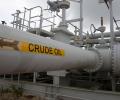
There is positive correlation between crude oil prices and Indian equities and investors can expect more upside after the recent rally in Brent crude price.

Stocks of Indian steel companies are reeling from pricing pressure that is partly blamed on cheap imports. The stocks have declined up to 9 per cent on the NSE in one month, likely allowing investors an opportunity to use the correction to enter the pack as pricing pressure eases. "In steel or any other commodity, if prices or spreads are nearing their bottom, it can be an opportune time to invest in those stocks.

The wholesale price-based inflation in February rose to 13.11 per cent on hardening of prices of crude oil and non-food items, even though food articles softened. After two months of mild easing, WPI inflation accelerated in February and remained in double digits for the 11th consecutive month, beginning April 2021. WPI inflation last month was 12.96 per cent, while in February last year, it was 4.83 per cent. The rise in crude oil and natural gas prices after the Russian invasion of Ukraine, beginning February 24, has put pressure on the wholesale price index, even though food articles saw softening across categories of vegetables to pulses to protein-rich items.

Exports to India's key markets - the US, the United Arab Emirates, China, Singapore, Bangladesh and Germany - witnessed a sharp decline, resulting in a 12.69 per cent contraction in outbound shipments during the first month of the current financial year, commerce department data showed. India's biggest export market - the US - with 17 per cent share witnessed 17.16 per cent contraction at $5.9 billion in April. This was followed by the United Arab Emirates (UAE) that saw 22.09 per cent decline at $2.23 billion exports.

There is an apparent divergence emerging in the link between commodity prices and headline inflation in India, said Subir Gokarn, deputy governor of the Reserve Bank of India (RBI), on Monday.

Street expects RBI to keep CRR unchanged, opt for open-market operations to ease liquidity
